CELEBRATING THE GIRL CHILD
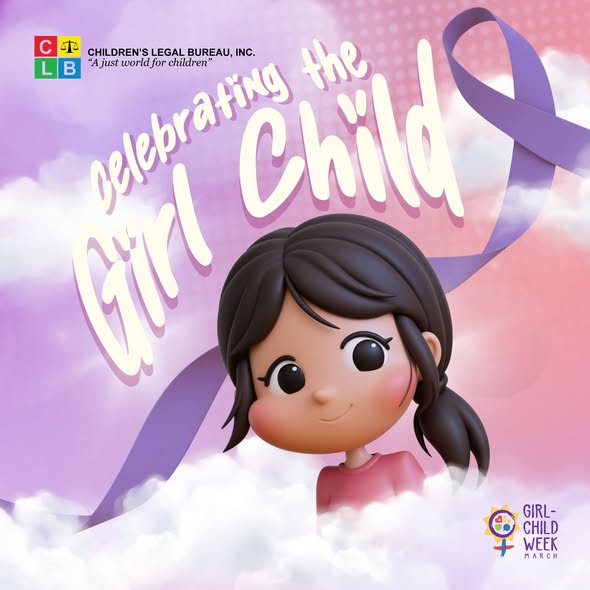
𝗧𝐡𝐞 𝐠𝐢𝐫𝐥 𝐜𝐡𝐢𝐥𝐝 𝐢𝐬 𝐧𝐨𝐭 𝐚𝐧 𝐚𝐟𝐭𝐞𝐫𝐭𝐡𝐨𝐮𝐠𝐡𝐭.
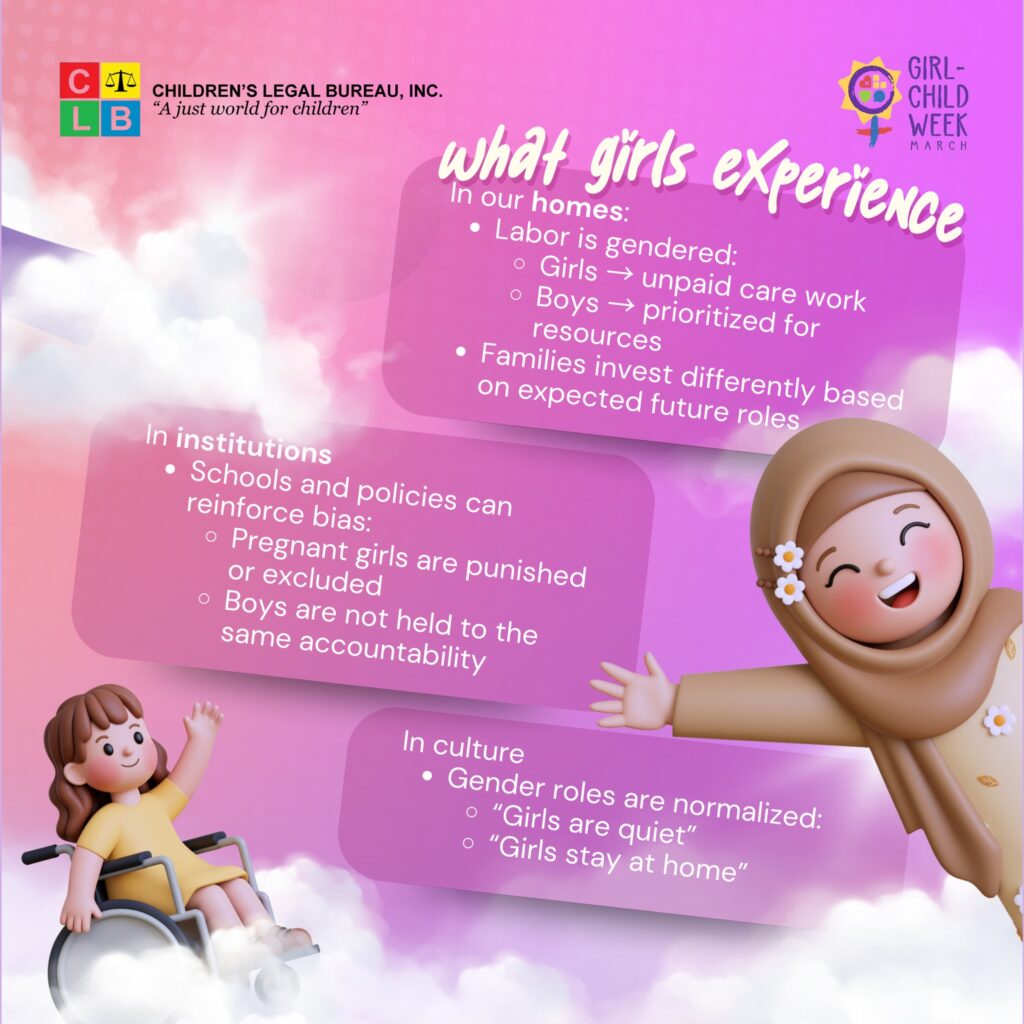
We celebrate the girl child to recognize that girls grow up within conditions that place them at a disadvantage from an early age. Girls do not grow up under the same conditions as boys, and those differences shape the rest of their lives. Across homes, schools, and communities, expectations placed on girls often limit their access to opportunities, shape their roles, and influence how they are treated compared to boys.
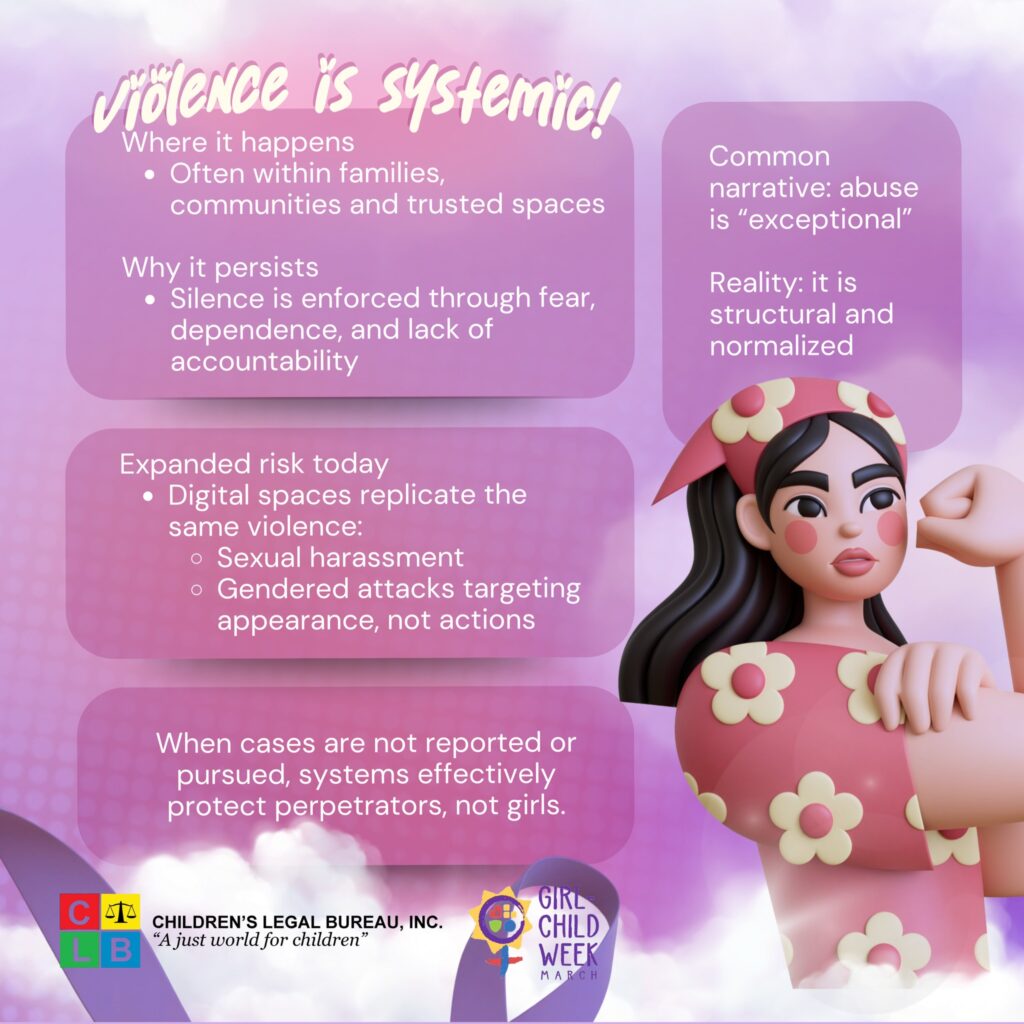
In many contexts, girls take on more unpaid responsibilities in the household, face stricter social expectations, and encounter barriers in education and decision-making. They are also more vulnerable to different forms of violence and exploitation, including those that occur within spaces that are expected to be safe. These conditions affect not only their well-being, but also their ability to participate fully in social, economic, and political life.
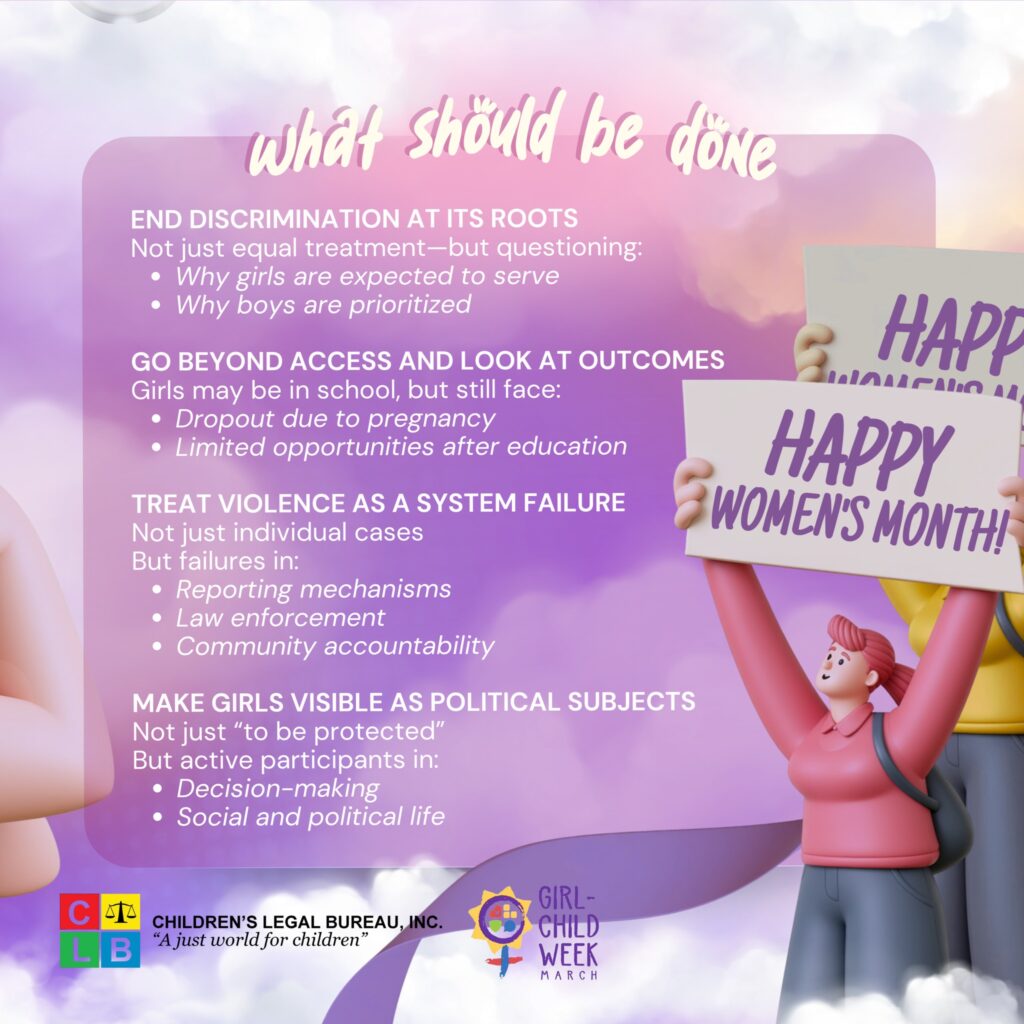
𝐓𝐡𝐞 𝐁𝐞𝐢𝐣𝐢𝐧𝐠 𝐏𝐥𝐚𝐭𝐟𝐨𝐫𝐦 𝐟𝐨𝐫 𝐀𝐜𝐭𝐢𝐨𝐧 identifies the 𝐠𝐢𝐫𝐥 𝐜𝐡𝐢𝐥𝐝 as a 𝐜𝐫𝐢𝐭𝐢𝐜𝐚𝐥 𝐚𝐫𝐞𝐚 𝐨𝐟 𝐜𝐨𝐧𝐜𝐞𝐫𝐧, recognizing that inequality begins early and has long-term consequences. Addressing these issues requires attention to how institutions, cultural norms, and everyday practices shape the experiences of girls.
Observing the girl child creates space to examine these realities, strengthen protections, and support efforts that ensure girls can access their rights without discrimination. It also emphasizes the need for consistent implementation of policies, accountability in cases of abuse, and the creation of environments where girls are able to speak, participate, and make decisions affecting their lives.
Celebration, in this context, is not limited to recognition. It is tied to the responsibility to address what girls are navigating, and to ensure that their rights are not conditional or denied.
𝘊𝘳𝘦𝘥𝘪𝘵 𝘵𝘰: 𝘔𝘢𝘳𝘪𝘢𝘯𝘯𝘦 𝘑𝘰𝘴𝘦𝘱𝘩𝘪𝘯𝘦 𝘊𝘢𝘵𝘦𝘴 𝘊𝘳𝘶𝘻, 𝘜𝘚𝘊 𝘐𝘯𝘵𝘦𝘳𝘯